Bedding Guide
How to Choose a Wool Comforter for Every Season
Wool can make a bed feel warm without feeling sealed in. But comforters differ in fill weight, construction and care, and the right choice depends less on the calendar than on the sleeper, the room and the weather outside.
Some bedding decisions announce themselves at once: a crisp sheet, a cool pillowcase, a blanket pulled up against a sudden chill. A comforter works more quietly. Its job is to help keep the bed at a comfortable temperature over the long hours of sleep, without demanding attention. Wool is often considered for that role because it can insulate while also taking up and releasing moisture. The result may feel warm and breathable rather than simply heavy.
That does not make every wool comforter right for every sleeper. Fill weight, quilting, shell fabric and the temperature of the bedroom all shape how a comforter performs. A person who sleeps hot in a well-heated apartment may need a different layer from someone who sleeps cold in a drafty room. Season matters, but it is only one part of the calculation.
To choose well, start with your own night-time conditions. Then compare the comforter’s materials and construction, consider whether you prefer one dependable layer or a seasonal rotation, and read the care guidance before buying. Wool’s appealing qualities are most useful when they match the way you actually sleep.
Why wool works as bedding
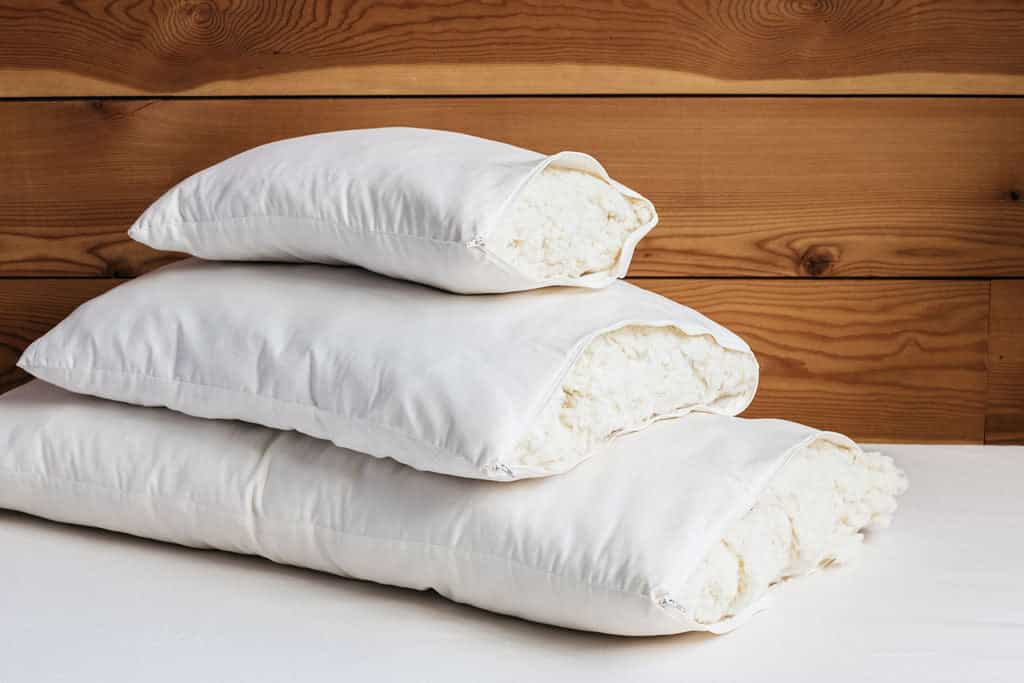
Wool fibers have a naturally crimped structure that can hold air. Air trapped within a textile helps slow heat loss, which is one reason wool is valued as an insulating fiber. At the same time, wool can absorb moisture vapor and release it gradually. In bedding, that can help moderate the damp, clammy feeling some sleepers notice when warmth builds under a less breathable layer.
These are material characteristics, not a promise that wool will keep every sleeper at an ideal temperature. Comfort depends on the whole sleep system: room temperature, sleepwear, sheets, mattress, duvet cover and personal preferences. A wool comforter can contribute to a more balanced-feeling bed, but it cannot correct every source of overheating or cold.
Wool comforters also vary in feel. Some are light and flexible, with a flatter profile than lofty down or synthetic alternatives. Others contain more batting and feel substantial. Their texture can range from softly yielding to comparatively firm, depending on fill density and quilting. If possible, assess both stated specifications and how the construction is described; the fiber name alone does not tell the whole story.
Begin with how warm you sleep
Before comparing fill weights, answer a simpler question: Do you usually feel too warm, too cold or comfortable beneath your current bedding? Think about ordinary nights, not only the coldest winter evening or the first hot spell of summer. Also notice whether you wake because you are sweating, reach for another blanket, or pull the covers away as the night progresses.
Hot sleepers may find a lightweight wool comforter a more practical starting point, particularly in a temperate or warm bedroom. A lighter fill can provide a covering layer without the same sense of insulation as a heavier comforter. But “lightweight” is not a universal standard. Check whether the maker provides a fill weight, a warmth description or a recommended season, and compare those details within the same product range when possible.
Cold sleepers, or people in poorly insulated rooms, may prefer a heavier option. More wool fill can provide additional insulation, though weight and warmth are related rather than interchangeable: the comforter’s construction and the layers around it also matter. Someone who likes a substantial covering may appreciate that extra weight; someone who dislikes pressure on the body may not.
For couples with different temperature preferences, a single comforter can become a negotiation played out every night. Consider two separate, lighter covers or a design that allows individual sections to provide different warmth, if such an option is available. Another approach is to choose a moderate-weight wool comforter and let each sleeper adjust with a personal blanket. The best arrangement is the one that avoids asking one shared layer to solve two incompatible comfort needs.
Match fill weight to climate and room temperature
Outdoor climate provides context, but bedroom conditions are more useful. Heating, air conditioning, insulation, window exposure and the number of people in the bed can all change how warm the room feels at night. A cold winter outside does not necessarily call for a heavy comforter if the bedroom is consistently warm. Likewise, a mild climate can still mean a chilly sleeping space in an older home.
A lightweight wool comforter may suit summer use, warm interiors or sleepers who tend to overheat. It can also work as a year-round layer in climates where temperatures remain moderate. In colder seasons, it can be paired with a blanket or additional bed covering rather than replaced immediately. This flexible approach lets the sleeper adjust the bed as conditions change.
A heavier wool comforter may be a better fit for winter, cooler bedrooms or people who routinely feel cold at night. For some households, it can serve through much of the year, with lighter sheets or an open window helping to manage warmer nights. For others, the same comforter will be too much as soon as the heating comes on.
When manufacturers publish fill weight, treat it as a useful comparison within a product line—not as a universal warmth rating. Comforter dimensions vary, and so can batting density and construction. If the information is unclear, ask the maker whether the option is intended for warm sleepers, cool sleepers or a particular range of room conditions.
Choose a seasonal strategy that fits your home
There is no rule that says a household needs a separate comforter for every season. Most people can build a practical system in one of three ways.
- One lighter comforter plus extra layers: A lighter base can work across changing weather. Add a blanket when the room cools and remove it when temperatures rise. This can suit homes with relatively mild seasonal changes.
- One year-round, medium-weight comforter: A moderate option may be enough when bedroom temperatures remain fairly steady. It is a straightforward choice for people who dislike changing bedding or storing an extra comforter.
- A seasonal pair: A lightweight comforter for warmer months and a heavier one for cold weather offer more precise adjustment. This approach makes sense when seasons bring significant temperature swings or when one comforter cannot comfortably cover the year.
Think about storage as well as sleep. A seasonal rotation requires a clean, dry place to keep the unused comforter, ideally protected from dust and damp. If storage is limited, a single adaptable layer may be more useful than the theoretically perfect winter and summer pair. The best seasonal bedding plan is not simply the one with the most options; it is the one you can maintain and use comfortably.
Look closely at construction and shell fabric
Wool fill is only one part of a comforter. The outer shell affects touch, airflow, durability and how well the batting is contained. Cotton is commonly used because it is familiar and breathable, but shell fabrics can differ in weave, weight and finish. Read the material description rather than assuming that two wool comforters will feel alike.
Quilting or stitching helps keep fill in place. Some designs use sewn channels, boxes or a grid pattern; others use tufting or a different method to secure the batting. Construction can influence how evenly the wool is distributed and how the comforter drapes. It also affects appearance: a quilted pattern may be visible beneath a duvet cover, while a flatter finish may make the bed look smoother.
Check the edges and practical details, too. Perimeter stitching can help stabilize the shape, while corner ties can attach a comforter to the inside of a duvet cover. Those ties are particularly useful for keeping the insert from shifting, though the cover itself must have compatible attachment points. If you plan to use a cover, confirm the comforter’s dimensions and the cover’s dimensions before relying on a close fit.
Comforter size is not always identical from one maker to another. A queen-size insert may not have the same dimensions across brands, and mattress height can affect how much coverage you want at the sides. Compare measurements with the bed and the duvet cover, not just the size label.
Understand what a duvet cover can—and cannot—do
A duvet cover acts as a washable outer layer, helping protect the comforter from body oils, everyday dust and minor spills. It can also change the look and feel of a bed without changing the insert. For wool comforters that are difficult to wash, this protective layer can make routine upkeep simpler.
A cover does not eliminate the need to care for the comforter itself. It cannot prevent every stain, and it does not replace airing or cleaning when the maker recommends it. Wash the cover according to its own label, and follow the comforter’s instructions separately. The two textiles may have very different requirements.
Consider the combined effect of the cover and the comforter. A heavy, tightly woven cover may alter the bed’s feel compared with a lighter cover. If temperature regulation is a priority, choose a cover whose fabric and weight suit the way you sleep. Smooth cotton, linen and other fabrics can feel distinctly different against the skin, even when the wool insert stays the same.
Care is part of the buying decision
Wool is not automatically machine washable. Some comforters may be spot-cleaned or professionally cleaned; others have specific washing instructions. A product’s care label should guide what you do. Never assume that a household washer, dryer or generic wool detergent is suitable simply because the filling is a natural fiber.
Before purchasing, ask how the comforter should be cleaned, whether the shell can be washed, and how it should be dried. A bulky comforter may exceed the capacity of a home machine even if the label permits machine washing. If professional cleaning is required, consider the cost and convenience over the product’s expected life.
Routine protection can reduce how often a comforter needs more intensive cleaning. Use a duvet cover, address small spills promptly using the maker’s guidance, and air the bedding when practical. If the instructions recommend sunning or airing, do so carefully and avoid prolonged exposure to direct sunlight unless the manufacturer specifically allows it. Care advice varies by construction and material; follow the directions supplied with the item.
Storage matters, too. Put a clean, fully dry comforter away in a breathable storage bag or other suitable container. Avoid sealing damp bedding into a space where moisture can linger. When taking it out for the season, give it time to air and check for any signs that require attention before putting it back on the bed.
Consider sensitivities and material preferences
People choose wool for different reasons: its insulating qualities, its feel, its natural origin or the way it performs in a particular sleep setup. Yet a natural fiber is not automatically the right fiber for every person. If you have a known sensitivity to wool, lanolin or a particular finish, review the product details and consult a qualified health professional if you are unsure.
Read claims carefully. Terms such as “hypoallergenic” or “temperature regulating” are often used to describe bedding, but they should not be treated as guarantees of a health outcome or a particular night’s comfort. Ask what the claim refers to and whether it is supported by information about the actual materials and construction.
For shoppers concerned about sourcing or processing, look for specific details about the wool’s origin, the shell fabric and any relevant third-party certification. A certification applies to defined criteria and scope; it does not automatically verify every environmental or performance claim a product might make. Clear descriptions are more helpful than broad promises.
A practical checklist before you choose
Luxury in bedding is often discussed as a matter of price or appearance. In daily use, a more revealing measure is whether the comforter suits the sleeper and holds up to the routine of the household. Before settling on a wool comforter, check the following:
- Your sleep temperature: Do you generally sleep hot, cold or somewhere in between?
- Your bedroom conditions: Is the room heated, air-conditioned, drafty or prone to seasonal swings?
- Fill weight and warmth guidance: Are these details available, and do they match your needs?
- Construction: How is the wool held in place, and will the comforter’s drape suit your preferences?
- Shell fabric and dimensions: Does the material feel right, and will the comforter fit your bed and duvet cover?
- Care requirements: Can you realistically follow the cleaning and storage instructions?
- Seasonal plan: Will you use one comforter all year, add layers or rotate between weights?
- Material transparency: Are fiber content, sourcing and certifications described clearly enough for your priorities?
The right choice is a personal climate
A wool comforter is not a weather forecast. It is one element in the small climate created between sheets, cover, mattress and sleeper. Its value lies in finding a balance: enough insulation for the room, enough breathability for the body, and a weight that feels comfortable rather than cumbersome.
For warm months or hot sleepers, begin with a lightweight wool comforter and add a removable layer only when needed. For colder bedrooms or people who sleep cold, consider a heavier fill, while checking how the comforter’s construction and shell contribute to its overall feel. If your home changes dramatically with the seasons, a two-weight system may be more comfortable than asking one layer to do everything.
Then give equal attention to the less glamorous details: dimensions, duvet ties, cleaning rules and storage. They determine whether the comforter remains easy to live with long after the first night. Choose according to the room you sleep in and the temperature you prefer—not the season printed on a calendar—and wool can be a considered, adaptable part of a well-made bed.