Bedding · Materials & buying guides
Choosing an Organic Mattress: Materials, Certifications, and Feel
“Organic” can be a useful starting point. It is not, by itself, a description of how a mattress feels, how it is built, or what every layer contains. To compare options with confidence, look closely at materials, certification scope, construction, and the support you prefer.
A mattress is an assembly, not a single ingredient. Its surface may be cotton; its comfort layer may include wool; its central support may be latex. Those parts work together, but each has a different job—and a different feel. A label that says “organic” may refer to one component, several components, or a particular stage of production. The useful question is not simply whether a mattress is organic. It is: which materials are certified, what does the certification cover, and how does the complete design suit the person who will sleep on it?
That distinction matters because the language of bedding can make unlike products sound interchangeable. “Natural,” “organic,” “chemical-free,” and “eco-friendly” are not precise substitutes for a material list or a named standard. A careful comparison starts with specifics: fiber and fill content, proportions where disclosed, layer order, cover construction, firmness, care instructions, and the certificates attached to the finished product or its components.
Start with the materials, not the headline
Many organic mattresses combine some version of latex, wool, and cotton. That combination is not a formula. The thickness and placement of each layer, the way the materials are processed, and the mattress’s overall construction influence both its response and its practical requirements. Two mattresses that use the same three materials may feel substantially different.
Latex: responsive support
Latex is commonly used as a mattress core or comfort layer. In general terms, it has a buoyant, springy response: it compresses under pressure and rebounds rather than feeling like a slow-moving, enveloping material. How firm or yielding it feels depends on the particular formulation, density, thickness, and construction. The word “latex” alone does not tell you whether a bed will feel plush, medium, or firm.
Ask whether the latex is natural, synthetic, or a blend, and whether the maker identifies the production method. Dunlop and Talalay are two common latex processes; the labels describe different manufacturing approaches, not a simple ranking from better to worse. For an organic latex claim, check whether the latex itself is certified and whether the certificate applies to the material used in the mattress being considered.
If you are evaluating a latex bed, pay attention to the thickness of the core and any additional comfort layers. A single, relatively firm latex core will not necessarily feel like a thicker mattress with multiple layers. The cover and any batting above the core also change the first impression at the surface. When possible, test the mattress in person or confirm the trial and return terms before buying.
Wool: a layer with several roles
Wool may appear as batting above a support core or beneath a fabric cover. Its loft and cushioning can soften the transition between the sleeper and a firmer layer below. Wool is also used in bedding for its insulating and moisture-managing properties, though a mattress’s temperature performance depends on the complete design, room conditions, bedding, and individual comfort.
Look for the wool’s location and form. A thin layer of felted wool is different from a deeper, softer comfort layer. Check whether the maker describes the wool as organic and whether the claim is backed by a certificate that applies to that fiber. Also read the care guidance: a mattress is not generally washed like a sheet, and spot cleaning or ventilation may be recommended instead.
Cotton: the surface and structure
Cotton commonly forms the outer fabric or a layer within the mattress. A cotton cover can influence how the bed feels to the touch, but it is only one part of the sleep surface. Fabric weight, weave, quilting, and the materials underneath all matter. When a cover is described as organic, verify whether the statement refers to the cotton fiber, the finished fabric, or a broader certified production chain.
A useful specification lists the cover separately from the fill and core. “Organic cotton mattress” might describe a cotton cover around a core made from other materials; it does not necessarily mean every component is organic. Clear product information should let you tell those things apart without guessing.
What certifications can—and cannot—tell you
Certifications can make material claims easier to assess, but only when their scope is understood. A logo is not a complete explanation. Find the name of the standard, identify the material or product it covers, and, where possible, check the certificate or certification record provided by the manufacturer. Standards can differ in purpose and requirements, so one should not be treated as proof of every environmental, health, or performance claim.
GOLS and certified latex
GOLS, the Global Organic Latex Standard, is associated with organic latex and requirements for its processing and supply chain. For a mattress marketed with certified organic latex, the central question is whether the latex in the product is within the scope of a valid GOLS certification. Look for a certificate or clear documentation, rather than relying on the word “organic” in a product title.
A GOLS claim about latex does not automatically certify a mattress’s cotton cover, wool batting, adhesives, or every other component. It also does not describe firmness, comfort, durability in a particular home, or whether the mattress is right for a particular sleeper. Certification is evidence about defined standards and materials; it is not a substitute for evaluating the finished bed.
GOTS and organic textiles
GOTS, the Global Organic Textile Standard, is a textile-processing standard that can apply to products made with certified organic fibers, subject to the standard’s requirements. In mattress descriptions, it may be cited for a cotton cover or another textile component. Check whether the certificate identifies the finished textile or product, and what exactly is included in its scope.
A mattress can contain GOTS-certified cotton without every non-textile component being certified under GOTS. Similarly, a certification for one textile does not establish the provenance of the latex core. The goal is not to collect logos; it is to map each claim to the material it actually covers.
Other labels and documentation
You may encounter additional certifications relating to forestry, emissions, or chemical testing. Read each one according to its purpose. For example, a standard addressing a textile or a supply-chain input should not be assumed to verify the entire mattress. Ask the maker for current documentation if the product page is vague, and look for the exact product or material named in the certificate.
- Identify the standard: Note the full name and, if available, the certificate number.
- Check the scope: Determine whether it applies to latex, cotton, wool, a cover, or the finished mattress.
- Match it to the product: Confirm the certificate relates to the model and materials being sold.
- Separate certification from performance: A certificate does not establish firmness, comfort, or suitability for every sleeper.
- Ask about omissions: If a component is not identified, request clarification rather than assuming it is certified.
Construction shapes the feel
A mattress is experienced from the top down, but its support comes from the whole build. The cover affects the first touch. A surface layer can cushion the body. A deeper core provides the main support. The interaction among those layers determines how quickly the mattress responds, how much it yields, and how distinctly a sleeper feels supported.
Consider a mattress with a latex core and a thin wool layer. It may feel more direct and buoyant than a design with thicker cushioning above the latex. A quilted cover can add a small amount of surface softness; it cannot transform a firm core into a deeply plush bed. Likewise, a product’s total height does not, on its own, reveal how much comfort material it contains or how that material is distributed.
When comparing specifications, look for a layer-by-layer description: material, thickness, position, and any stated firmness or density information. If the maker provides only a broad phrase such as “natural comfort layers,” ask what that means in measurable terms. The more specific the construction details, the easier it is to compare one mattress with another.
Choose firmness by how your body feels
Firmness is personal, and labels are not perfectly standardized across brands. A “medium” mattress from one maker may feel firmer or softer than another’s. Body shape, sleep position, personal preference, and the bed base can all affect the sensation. The practical test is whether the mattress feels supportive and comfortable over time, not whether its firmness label matches an abstract category.
Side sleepers often pay particular attention to pressure at the shoulders and hips. Back sleepers may focus on whether the surface supports them without an uncomfortable gap or excessive sinking. Stomach sleepers often prefer a surface that limits too much sagging around the middle. These are useful starting points, not strict rules: individual needs differ, and a person’s comfort cannot be determined by sleep position alone.
During an in-person trial, spend enough time in your usual sleeping positions to notice pressure, alignment, and ease of movement. If shopping online, review the trial period, return process, exchange fees, and any requirements for using a particular foundation. A return policy is part of the decision, particularly when the feel cannot be tested before delivery.
Temperature comfort is a system
A breathable fiber does not guarantee that every sleeper will feel cool. Temperature is shaped by the mattress, sleepwear, sheets, duvet, room temperature, humidity, and individual physiology. Wool and cotton are often selected in natural bedding for their ability to handle moisture and air, while latex construction and mattress covers can influence how heat moves through the bed. The result is the behavior of a system—not a promise made by one material.
Think about the whole bed when assessing temperature. A dense duvet, a warm room, or tightly woven sheets may matter as much as the mattress cover. If you sleep hot, look for a clear description of layer construction and surface fabric, then consider whether your other bedding can be adjusted. Claims such as “temperature regulating” should be read as descriptions of material properties, not guarantees of a particular sleep experience.
Care, support, and the bed base
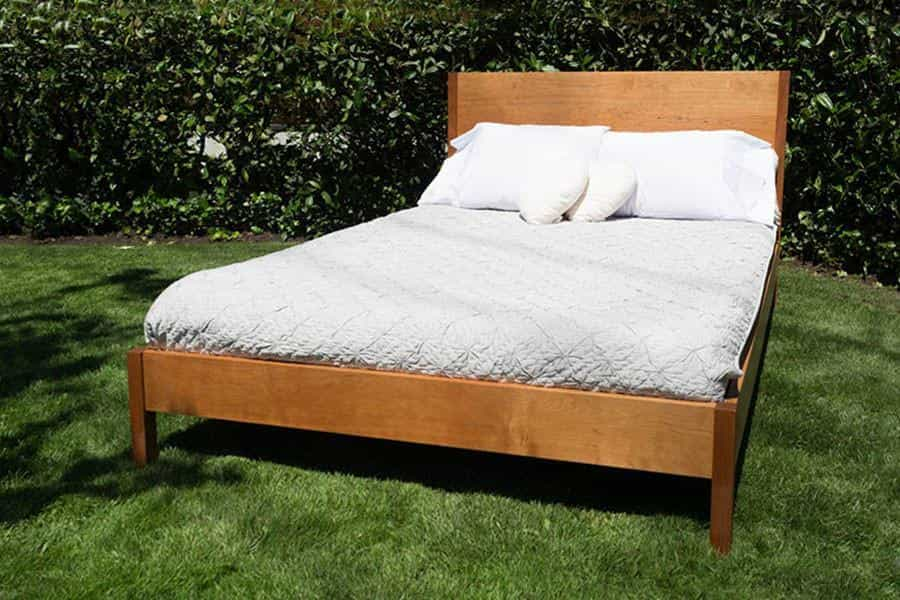
Long-term performance depends partly on how the mattress is used. Follow the manufacturer’s instructions for the foundation, ventilation, rotation, and cleaning. Some models are designed for a slatted platform; others may have specific requirements for spacing or support. An unsuitable base can affect stability and may influence warranty coverage.
Natural materials do not mean maintenance-free materials. A mattress protector can help guard against spills and everyday wear. Regularly airing the bed may be recommended, while direct sunlight or aggressive cleaning products may be discouraged for some components. Check whether the mattress can be flipped or only rotated; not every construction is reversible. These small practical details are worth knowing before delivery, when moving or maintaining a heavy mattress becomes more complicated.
For a concrete example of how these materials can be combined, the Organic Mattress – Latex 6.5" is described as having a GOLS-certified organic Dunlop latex core, felted organic wool, and a GOTS-certified organic cotton canvas cover. Its stated construction is 6.5 inches thick, and its care guidance calls for a slatted bed frame for ventilation, monthly flipping, and a mattress protector. Those details offer more to evaluate than the word “organic” alone: the listed materials, their arrangement, and the care requirements are all visible points of comparison.
A practical comparison checklist
Before settling on a mattress, put the product descriptions side by side. A simple checklist can reveal what a polished headline leaves out—and make it easier to ask useful questions.
- Material breakdown: What are the core, comfort layers, batting, and cover made from?
- Organic claims: Which specific components are described as organic?
- Certification: Is GOLS, GOTS, or another standard named, and what material or product does it cover?
- Construction: What are the thickness and order of the layers? Is the mattress one piece or made from multiple layers?
- Feel: How is firmness described, and can you test the mattress or use a trial period?
- Support system: What type of bed frame or foundation is recommended?
- Care: Can the mattress be rotated or flipped? How should spills and routine refreshes be handled?
- Ownership terms: What are the warranty, delivery, trial, and return conditions?
The most useful question is the most specific one
Organic mattresses are not a single feel or a single construction. One may prioritize a resilient latex core; another may place more emphasis on cushioning, wool batting, or a particular cover. Certifications can help clarify the sourcing and processing standards of specific components, but they do not replace a transparent materials list or a real-world assessment of comfort.
The strongest choice is the one that connects evidence to experience. Confirm which materials are certified. Understand what the certificate covers. Compare the layer arrangement, firmness, and care requirements. Then consider how the mattress feels beneath your body and whether its support suits your sleep habits. That is a more reliable route to a confident decision than treating a premium label—or a single certification logo—as the whole story.